
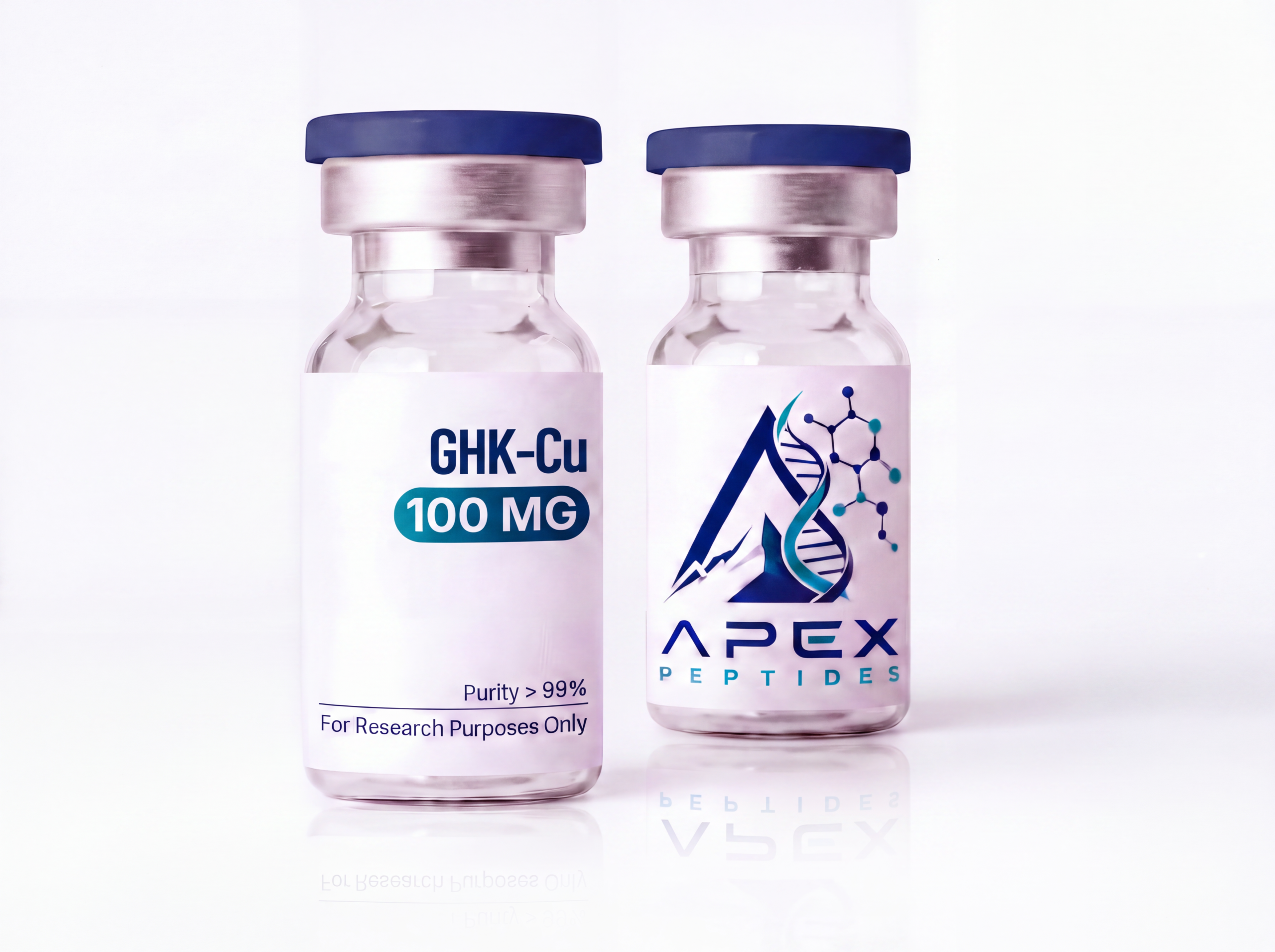
GHK-Cu
Collagen Synthesis Studies
$40.00
- Format50mg lyophilized vial
- Storage-20°C, desiccated
- Current Batch#RC-1042
GHK-Cu is a naturally occurring copper-binding tripeptide composed of three amino acids. First identified in human plasma in 1973, it has since become one of…
1000 in stock
About GHK-Cu
GHK-Cu is a naturally occurring copper-binding tripeptide composed of three amino acids. First identified in human plasma in 1973, it has since become one of the more extensively studied peptides in dermal research. Studies have examined its effects on collagen production, skin-cell activity, and changes within the surrounding extracellular tissue structure. Interest in GHK-Cu also grew after researchers observed that circulating levels decline with age.
Full Specification
| Molecular Formula | C14H24CuN6O4 |
| Molecular Weight | 403.9 g/mol |
| Purity | ≥99% (HPLC verified) |
| Appearance | White to off-white lyophilized powder |
| Storage | -20°C, desiccated |
| Format | 50mg lyophilized vial |
The GHK-Cu Molecule
An illustrative representation generated from the compound's molecular formula, alongside its logged molecular data. This figure is schematic — not a measured conformation.
How GHK-Cu Works
The pathways GHK-Cu acts on — and what each one does. The animation traces its signal outward from the compound to every target it engages.
Signalling pathways studied in preclinical models · illustrative
Copper Transport & Signaling
Copper DeliveryGHK-Cu chelates copper(II) ions and delivers them to cells.
ECM Remodelling
Collagen SynthesisFibroblast production of type I and III collagen, glycosaminoglycans and decorin has been measured in culture, alongside changes in extracellular matrix architecture.
Copper Transport & Signaling
Copper DeliveryGHK-Cu chelates copper(II) ions and delivers them to cells.
What GHK-Cu Is Researched For
Collagen Production Research
Studied for effects on collagen production and skin-cell activity.
Extracellular Tissue Studies
Examined for changes within the surrounding extracellular tissue structure.
Study-Reported Magnitudes
Representative figures from published research; results vary by protocol.
Certificate of Analysis
Every batch is tested by an accredited lab before it ships — here's the paperwork to prove it.
Orders ship within 1–2 business days with tracking provided. See our full Shipping Policy for carrier and timeline details.
Common Questions About GHK-Cu
A naturally occurring copper-binding tripeptide first identified in human plasma in 1973.
Because circulating levels have been observed to decline with age.